Verifiable evidence.
By sector. By regulation.
Twelve regulated environments, seven regulatory frameworks, and a single evidence infrastructure. What varies from one sector to another is the regulation requiring the test; the method of producing it is the same.
Twelve sectors, eight frameworks, one evidence layer.
For guidance only. “Sector-specific” encompasses MDR/IVDR, GxP, ISO 9001, and the DSM Directive. Applicability depends on the product, its intended use, and the specific legal framework.
Evidence applied to regulated environments.
Each case describes potential uses of technical evidence. Its applicability depends on the product, the purpose, and the specific legal framework.
Defense and Strategic Industry
Evidence related to the supply chain, versions, access, and critical decisions. The architecture must be evaluated based on classification, jurisdictions, and national security requirements.
Healthcare and Digital Health
Evidence of versions, validations, human interventions, and assisted clinical decisions. The high-risk status depends on the intended use and the classification under the MDR.
AI and High-Risk Systems
Evidence of versions, logs, approvals, incidents, and human oversight. Supports the review of controls required for high-risk systems in accordance with Annex III.
Energy and Critical Infrastructure
Evidence of incidents, containment measures, operational decisions, and configuration changes. NIS2 requires early warning within 24 hours and subsequent notification.
Banking and Insurance
Evidence of ICT incidents, response decisions, critical changes, and controls over third parties. Strengthens the traceability of the DORA risk management framework.
Pharmaceuticals and Biotechnology
Evidence of changes, approvals, validations, and data provenance in regulated systems. Supports GxP inspections, clinical trials, and AI governance in healthcare.
Governments and Public Institutions
Traceability of case files, automated decisions, approvals, and security controls. Enhances ENS audits and the management of electronic documents and services.
Law and Justice
Cryptographic fingerprints and timestamps for integrity, correspondence, and chronology. The evidentiary value also depends on the chain of custody and qualified services.
Human Resources and Talent Acquisition
Recording of versions, criteria, human interventions, and exceptions in recruitment or workforce management systems. Classification as high risk depends on the use case.
Automotive and Advanced Manufacturing
Evidence of software versions, firmware, components, and vulnerabilities. Supports product lifecycle and security obligations related to digital assets.
Industrial Manufacturing and ISO 9001
Product traceability, engineering changes, software versions, and approvals. Strengthens quality audits and CRA requirements for products with digital components.
Media, Advertising, and Entertainment
Evidence of declared provenance, licenses, rights reservations and versions. The AI Act establishes specific obligations for providers of general-purpose models.
Where it is already in production.
Rocada Design
ISO 9001 traceability in AI-assisted design, version by version, without a single nonconformity.
VerifiedRead the case →Five ISO certifications · EU AI Actffuuss · OTS Group
AI compliance under five concurrent ISO certifications, with not a single nonconformity.
VerifiedRead the case →HR · AI-Powered Recruitment · EU AI ActMerlin Digital Partners
AI-assisted talent selection with documented human oversight: the system's recommendation, the person's decision, and the documentation of that decision are recorded and verifiable for both the client and the candidate.
Laura Xicota, CEO of Merlin Digital Partners, is a member of the V-PROOF team.
Case in progressView the step-by-step process →Reading by sector.
Technical and regulatory analysis of each business segment, for compliance, legal, and management teams.
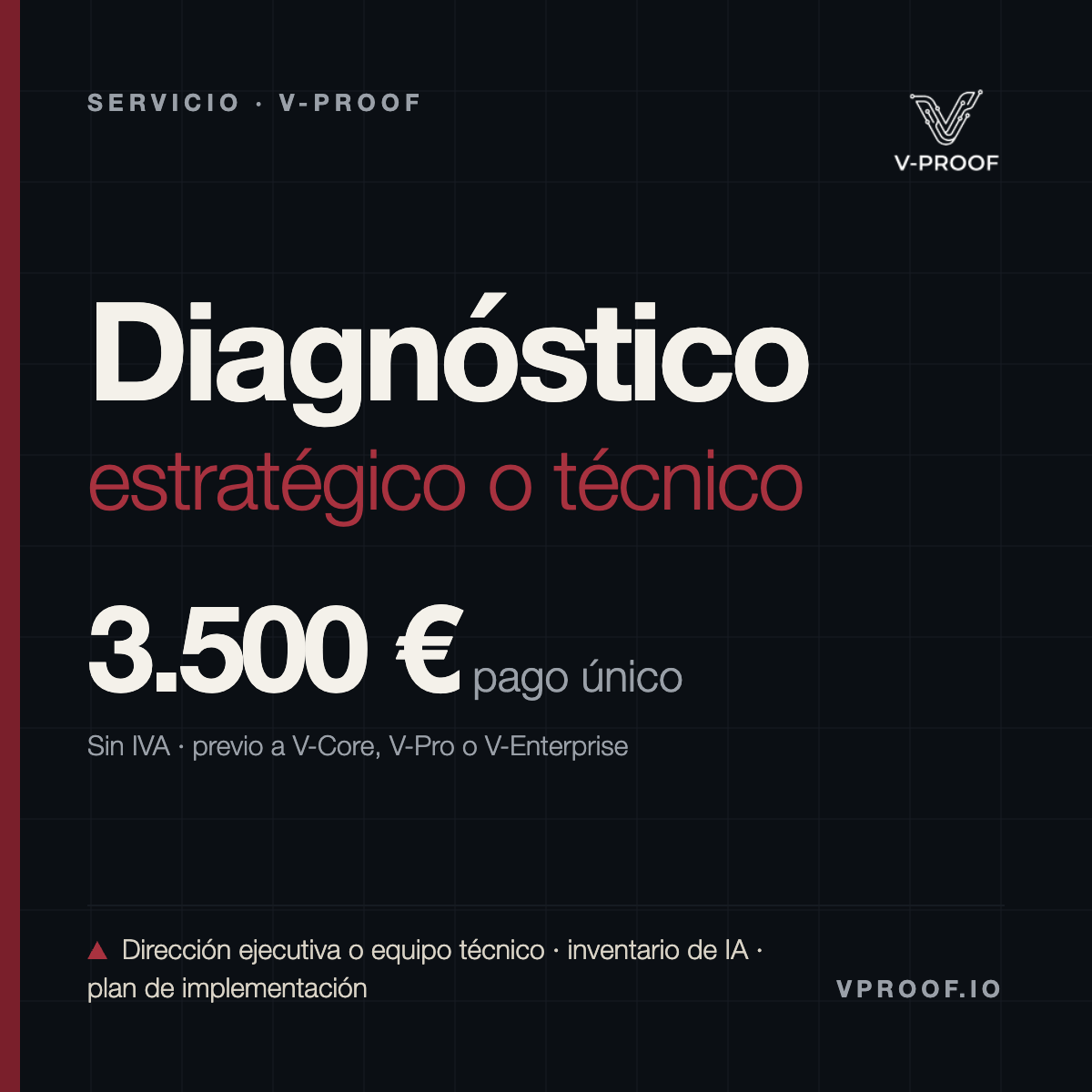
Is your organization listed in Annex III?
High-risk systems must be compliant by December 2, 2027. Executive session with an analysis of your architecture, a regulatory exposure map, and a prioritized roadmap. Deliverable within five business days.
Technical and strategic assessment. This does not constitute legal advice or certification.