Which version is currently in effect? And who approved it?
In any audit of an ISO management system, two questions inevitably come up sooner or later: Which revision is currently in effect? And who approved it? All too often, the answer begins with a search for paperwork.
The Longest-Standing Problem in Records Management
Printed procedures that no one knows if they're still in effect. Signatures that indicate who signed, but not exactly what they signed. Shared folders containing three versions of the same document and a fourth in someone's email.
It's not a problem with the tools: most organizations have a document management system. It's a problem with verification. The system knows what's stored, but it can't prove to a third party what was in effect, who approved it, and when.
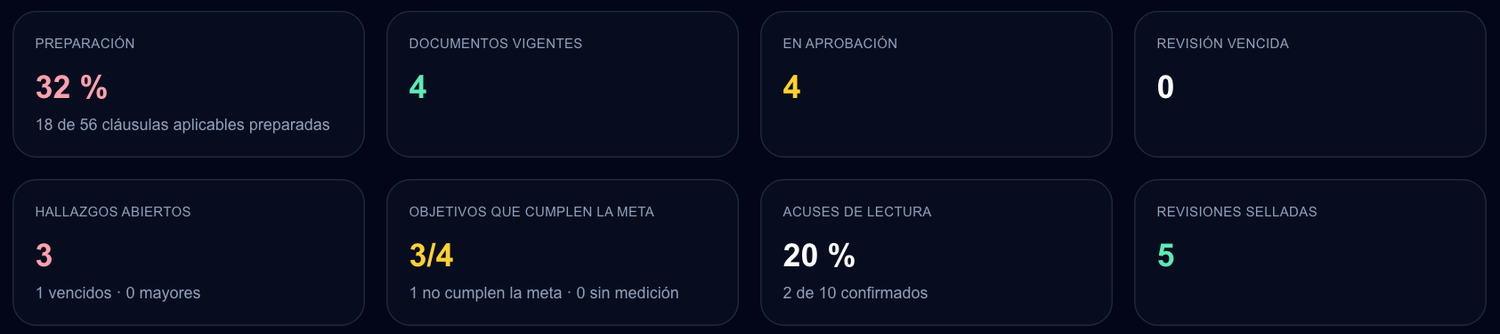
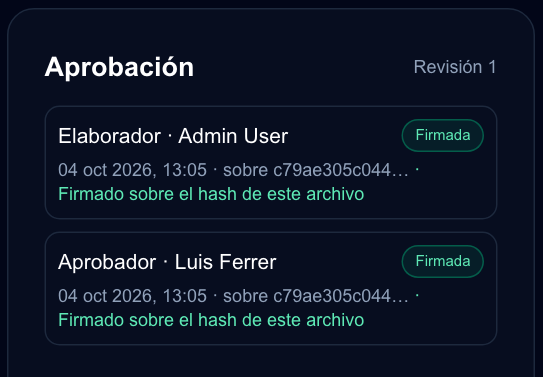
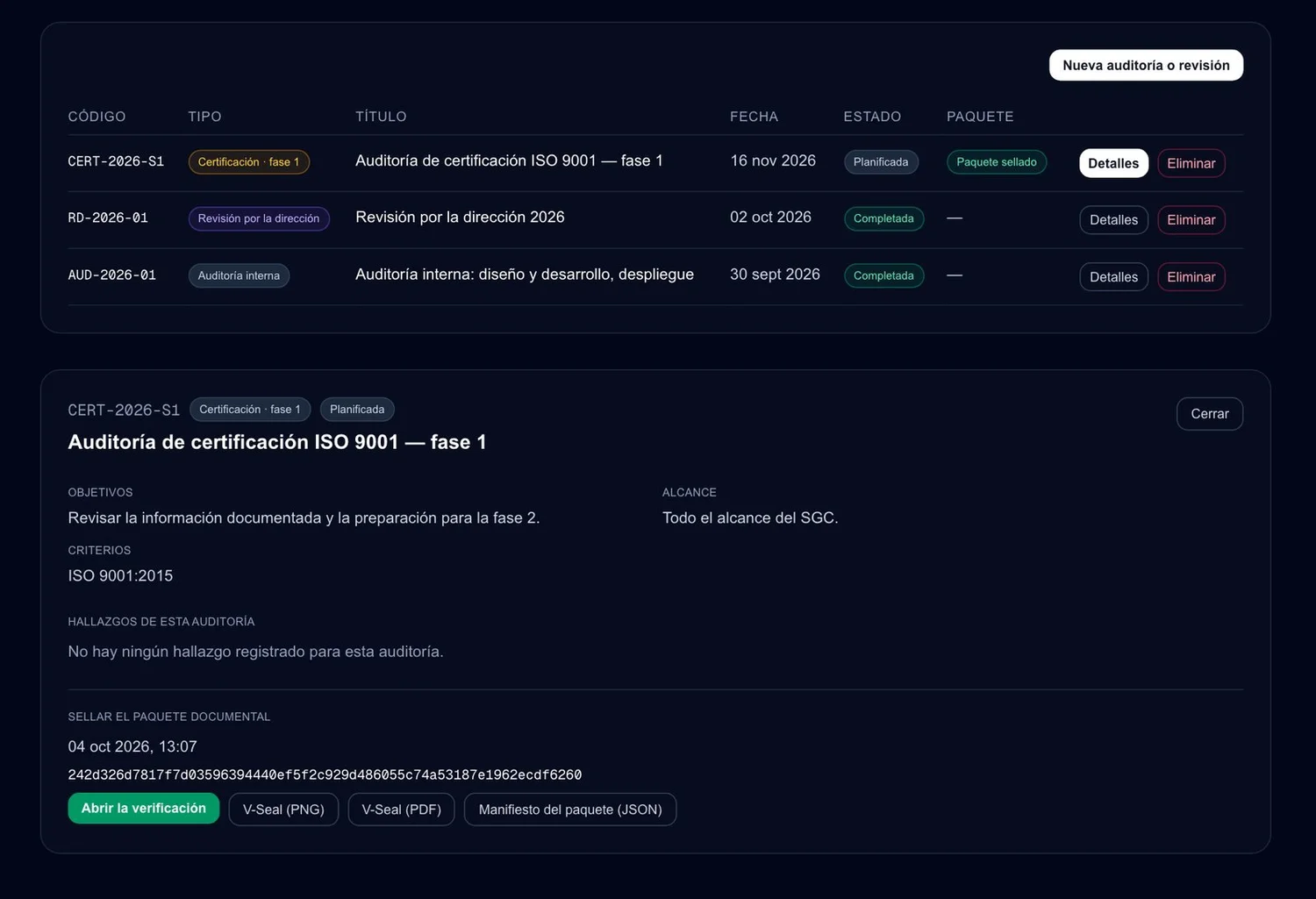
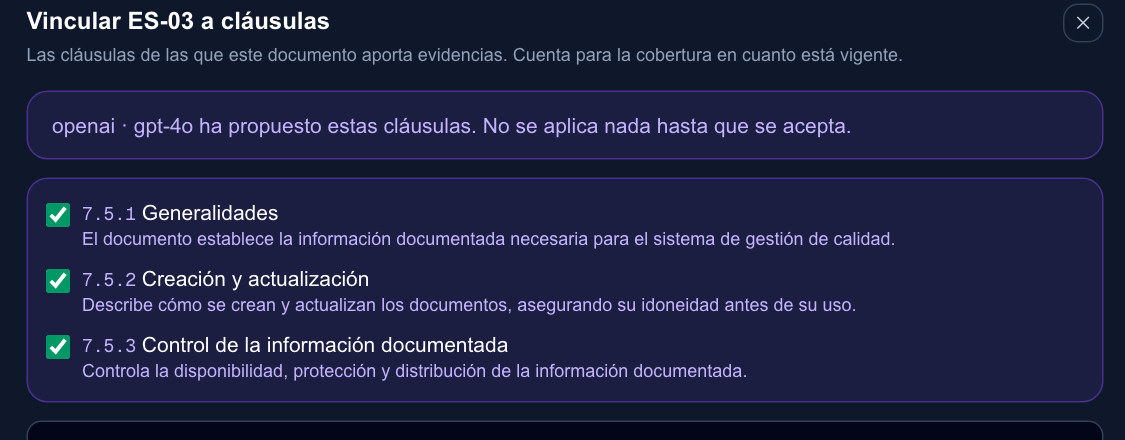
Actual screenshots from the V-PROOF Portal, captured from V-PROOF's own quality management system. Demonstration data.
Six pieces of evidence
Verifiable ISO Management, the new module from V-PROOF, turns every step of document control into verifiable evidence:
Signatures associated with the file.
The person who creates, reviews, and approves the document signs using the file's exact digital fingerprint. The "Sign" button is only enabled if the digital fingerprint calculated by the browser matches. No one signs on behalf of another person.
A V-Seal® that knows when it's obsolete.
Each copy bears its own V-Seal®, which includes a QR code that indicates whether the revision is current, superseded, or withdrawn—this information is retrieved when the code is scanned, not when it is printed. To verify that a specific file corresponds to that revision, its digital fingerprint is also checked.
Sealed package of documents.
Before the audit, a single stamp certifies that everything is in order. What the agency observed in Phase 1 can be compared with what it audits in Phase 2, taking into account the identified changes.
Read receipts with verification.
Each acknowledgment records which version the person has read.
Coverage per clause, without IA.
What applies, what documented information is expected, what is currently in effect, and what findings are pending.
A certified date for each record.
Management review records, audit reports, and change logs, cryptographically signed.

Whatever standard you need, the same structure
All management system standards share the same harmonized structure: context, leadership, planning, support, operation, evaluation, and improvement. That is why V-PROOF supports whichever system the organization chooses—whether it is ISO 9001, 14001, 45001, ISO/IEC 27001, or another standard—with the same certifications and the same V-Seal®.
And it is the same framework used to govern AI under ISO/IEC 42001 and the European AI Regulation. A single layer of evidence for the entire management system.
Coverage Under the ISO 9001 Clause · V-PROOF QMS
Actual data from V-PROOF's own quality management system, currently being implemented. Calculated without AI.
AI makes suggestions; a person decides
AI can suggest which clauses a document covers. Nothing is saved without a person's approval, and confidential documents never leave the organization. People always come before AI.
What it doesn't do
Certification continues to be issued by an accredited body: V-PROOF organizes, verifies, and seals the evidence that this body will review. Approval signatures are internal evidence linked to a file and an authenticated individual; they are not qualified electronic signatures (eIDAS). They do not reproduce the text of the standards, which must be purchased separately. And under ISO 45001, they do not replace the occupational safety and health service: they store, sign, and seal the work performed by authorized personnel.
Every document, signed. Every revision, verifiable.
From the signed document to the audit package.
Recorded on the V-PROOF Portal: step-by-step signatures, V-Seal® with a validity QR code, and a sealed document package.
Watch the demo